Moving an office, closing a business or preparing a commercial property for its next tenant involves more than packing a few boxes. Desks, workstations, office chairs, filing cabinets and IT equipment all need to be organised, handled and removed properly. Without a clear plan, an office clearance can cause unnecessary delays, workplace disruption and additional costs.
Pic Drop Removal provides practical support for businesses requiring Office Fit-Out Removal in Brisbane during relocations, refurbishments, downsizing and end-of-lease transitions. From small offices in Brisbane CBD to larger commercial workplaces across surrounding suburbs, professional removal assistance can make the clearance process more organised and efficient.
Whether you need office furniture removal in Brisbane, workstation dismantling or assistance with clearing selected office equipment, Pic Drop Removal can help you plan the removal process according to your workplace requirements. This guide explains how to prepare for an office fit-out removal, manage desks and IT equipment, and reduce unnecessary delays before booking a professional removal service.
What Is Office Fit-Out Removal?
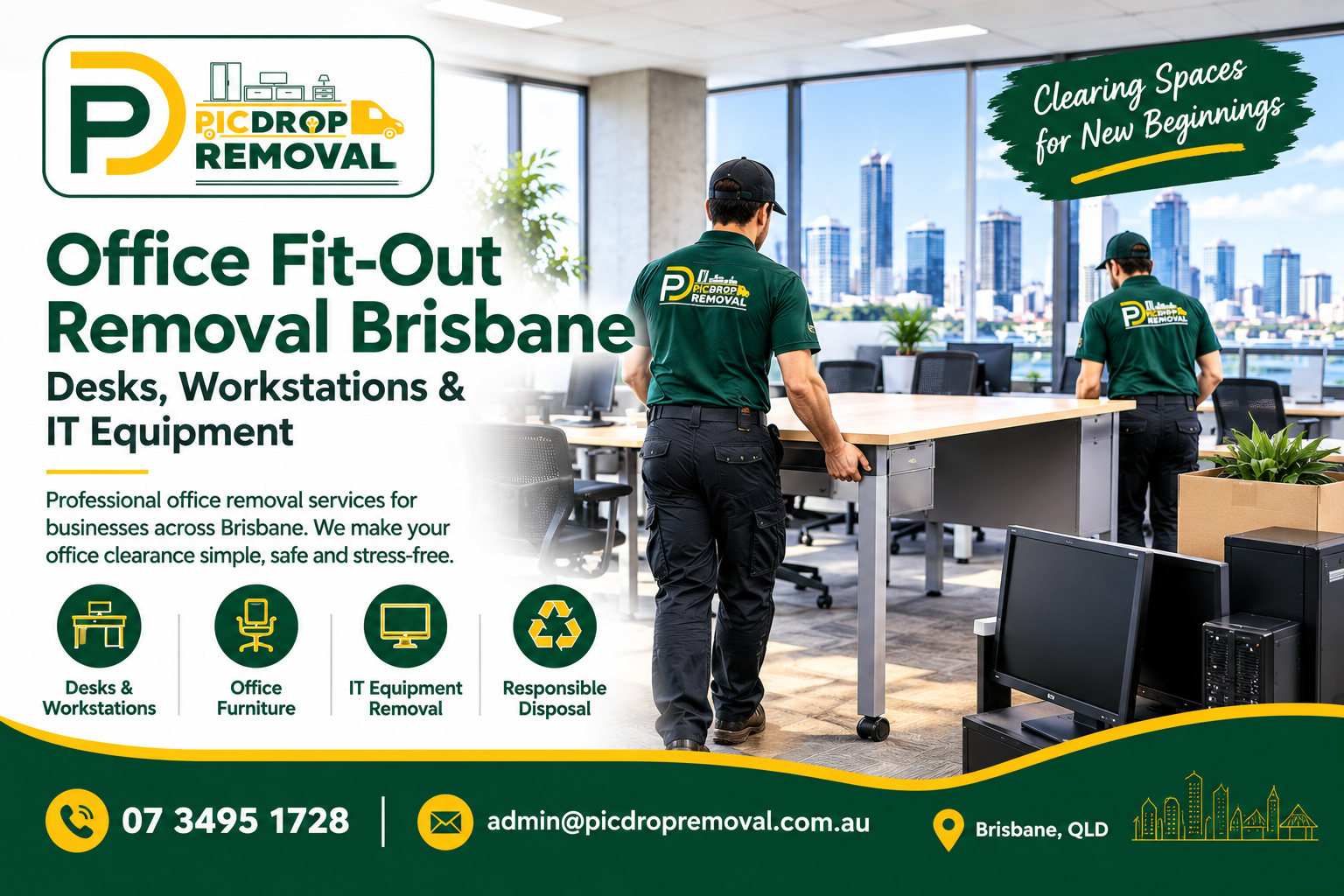
Office fit-out removal is the process of clearing furniture, equipment and selected workplace fixtures from a commercial property. The scope can range from removing a few desks and chairs to clearing an entire office before refurbishment or handover.
Typical items may include:
- Office desks and workstations
- Office chairs and meeting-room furniture
- Filing cabinets and storage units
- Reception desks and shelving
- Workstation partitions and screens
- Computers, monitors and printers
- Unwanted furniture and selected commercial waste
It is important to understand that office furniture removal is not always the same as a full commercial strip-out. Removing loose desks and chairs is different from demolishing fixed walls, flooring, ceilings or built-in fixtures. If your project involves structural or building-related work, you may need specialist contractors and approval from the property owner.
Before arranging your removal, confirm which items need to be transported, dismantled, recycled or disposed of.
When Do Businesses Need Office Fit-Out Removal in Brisbane?
Businesses may need office clearance for several reasons. Identifying the purpose of the removal helps determine the required labour, equipment and schedule.
1. Office Relocation
When a business moves to a new location, not every item of furniture will necessarily fit the new office. Some desks may be outdated, surplus workstations may no longer be needed, and storage equipment may not suit the new layout.
A planned office relocation can include moving reusable furniture to the new premises while clearing unwanted items from the old workplace.
2. End-of-Lease Office Clearance
Commercial tenants may need to remove their belongings before returning a property. Depending on the lease agreement, the premises may also require make-good work.
Furniture removal and building reinstatement are separate tasks, so check your lease requirements before deciding what should be removed.
3. Office Downsizing
A smaller workplace may require fewer desks, chairs and storage units. Removing surplus furniture can help create a more organised working environment and free up valuable floor space.
4. Office Refurbishment
Before a new office fit-out begins, existing furniture and equipment may need to be cleared. This allows refurbishment contractors to work in a more accessible space.
5. Business Closure
When a business closes, office furniture, equipment and unwanted items may need to be sorted into categories such as items to keep, sell, donate, recycle or dispose of.
A removal plan can help ensure that valuable equipment and confidential documents are not removed accidentally.
Office Furniture Removal Brisbane: What Items Can Be Removed?
Office furniture removal generally involves collecting and transporting workplace furniture. The exact items accepted depend on the removal provider and the condition, size and handling requirements of each item.
Common furniture removal requirements include:
- Individual desks
- Modular workstations
- Office chairs
- Boardroom tables
- Filing cabinets
- Shelving units
- Reception counters
- Storage cupboards
Before booking Office Furniture Removal Brisbane, prepare an inventory of the items you want removed. Include approximate quantities and identify any furniture that is unusually large, heavy or connected to other units.
This information helps the provider understand the job and determine whether additional handling or dismantling may be needed.
Should Office Desks Be Dismantled Before Removal?
Not necessarily. Some desks can be moved as complete units, while others may need to be disassembled to pass through doors, lifts or narrow corridors.
The decision depends on:
- Desk size and construction
- Access through the building
- Whether the furniture is modular
- The destination of the furniture
- Whether the items will be reused
If you want the furniture reassembled at another location, keep screws, fittings and other components organised. Confirm in advance whether dismantling and reassembly are included in your quote.
Workstation Removal Brisbane: How to Prepare
Workstations are commonly used in open-plan offices, shared workspaces and commercial environments. Unlike individual desks, connected workstation systems may include screens, panels, cable management and shared components.
Workstation Removal Brisbane requires planning around the furniture layout, dismantling requirements and building access.
Step 1: Review the workstation layout
Identify how many workstations need to be removed and whether they are joined together. A floor plan or photographs can help communicate the arrangement.
Step 2: Separate items that will be reused
Some businesses may want to move particular workstations to their new premises while disposing of others. Label these items clearly before removal begins.
Step 3: Plan dismantling
Check whether screens, panels and shared desk components need to be separated. Confirm who is responsible for the dismantling and whether reassembly is required.
Step 4: Organise components
If the furniture will be used again, keep hardware and components together. Labelling parts can make future reassembly more straightforward.
Step 5: Confirm the removal route
Review doorways, lifts, stairways, loading docks and parking arrangements. Commercial buildings may have specific requirements for moving large furniture.
A clear workstation removal plan can reduce unnecessary handling and help the project run more efficiently.
IT Equipment Removal Brisbane: Computers, Monitors and Data Security
Office clearances often include computers, monitors, printers, telephones and networking equipment. These items require additional consideration because they may contain sensitive information or be vulnerable to damage during transportation.
IT equipment should be prepared with the involvement of your business’s IT team before it is disconnected or removed.
What IT equipment may need to be removed?
Depending on the office, the equipment may include:
- Desktop computers and monitors
- Printers and photocopiers
- Network switches and routers
- Office phones
- Monitor arms and accessories
- Servers and storage devices
- Cables and peripheral equipment
The handling requirements depend on the type of equipment and the services offered by the removal provider.
Back up important data
Before equipment is disconnected, ensure important business files and systems have been backed up according to your IT procedures.
Protect confidential information
Computers, hard drives, printers and other devices may contain confidential business data. Data wiping, retention and destruction should be handled through suitable IT and information-security procedures.
Simply transporting old devices does not guarantee that the information stored on them has been securely removed.
Disconnect equipment safely
Your IT team or an appropriately qualified technician should manage the disconnection of equipment where necessary. Provide the removal team with clear instructions about which items are ready for transport.
Confirm equipment disposal
If old IT equipment is being discarded, ask whether the provider offers suitable e-waste arrangements or works with an appropriate recycling partner. Data-bearing devices may require specialist handling or destruction.
Before booking IT Equipment Removal Brisbane, confirm what equipment the provider accepts and whether any additional arrangements are required.
How Much Does Office Fit-Out Removal Cost in Brisbane?
The cost of office fit-out removal in Brisbane depends on the size of the office, the quantity of items and the work involved. There is no single price that applies to every commercial clearance project.
Factors that can affect the total cost include:
- Number of desks and workstations
- Amount of furniture and equipment
- Dismantling and reassembly requirements
- Distance between locations
- Lift, stairway and loading-dock access
- Labour and vehicle requirements
- Handling of fragile or heavy items
- Disposal and recycling arrangements
- Preferred moving date and working hours
Some providers use hourly pricing, while others prepare a project-specific quote based on the scope of work.
How to Request an Accurate Office Removal Quote
When contacting a removal company, provide as much practical information as possible:
- The office address and location.
- The number of desks and workstations.
- The type and quantity of IT equipment.
- Whether furniture requires dismantling.
- The destination of items being relocated.
- Building access restrictions.
- Your preferred removal date.
Photographs, a furniture inventory or a site assessment may help the provider understand your requirements.
A detailed quote should clearly explain the included services and any additional charges that may apply.
How to Prepare Your Office for Removal
Preparing your office before removal makes the process easier and helps prevent delays. Follow these simple steps to get your workplace ready.
1. Make a List of Items
Walk through your office and list everything that needs to be removed, such as:
- Desks and workstations
- Office chairs
- Filing cabinets
- Computers and monitors
- Meeting tables
- Other unwanted furniture
Include the number of items and mention anything that needs special care or dismantling.
2. Separate Items You Want to Keep
Not everything may need to be removed. Some furniture and equipment might be moved to your new office.
Clearly label the items you want to keep, relocate or remove. This helps prevent important belongings from being taken by mistake.
3. Prepare Your IT Equipment
Computers and other electronic devices need careful handling. Before removal:
- Back up important files and data.
- Disconnect computers and other devices.
- Label equipment and cables that will be moved.
- Secure confidential business information.
- Separate electronic items that need recycling.
Speak with your IT team if any equipment requires special handling.
4. Check Building Access
Ask your building manager about the rules for office removal. You may need to arrange:
- Lift or elevator access
- Loading dock access
- Parking for removal vehicles
- Building access permissions
- Approved removal times
Checking these details early can help prevent delays on removal day.
5. Choose the Right Removal Time
Choose a removal time that causes the least disruption to your business. Some offices prefer removal during evenings or weekends to avoid disturbing employees and customers.
After-hours and weekend services depend on the removal company’s availability and building approval.
6. Decide How Unwanted Items Will Be Handled
Before removal, decide what should happen to your unwanted furniture and equipment. Some items may be reused, donated, recycled or disposed of.
Discuss your requirements with the removal provider in advance, especially if you need electronic recycling or disposal documentation.
7. Check the Office Before Leaving
Complete a final check of the office to make sure everything has been handled correctly. Check meeting rooms, storage areas, desks and other spaces.
Make sure:
- All agreed items have been removed.
- Furniture you want to keep is still in place.
- Important documents and personal belongings have been collected.
- No unwanted items have been left behind.
A simple final check helps ensure your office is ready for its next stage.
Can Office Fit-Out Removal Be Completed After Hours?
Yes, some commercial removal providers offer evening and weekend scheduling, depending on their availability and the requirements of the project.
After-hours removal may be useful for businesses that want to minimise disruption during normal working hours. However, the building may have restrictions on access, noise, loading docks or lift use.
Before selecting an after-hours schedule, confirm:
- Building access hours
- Lift and loading-dock availability
- Security or access requirements
- Expected project duration
- Additional charges, if applicable
The removal schedule should be agreed upon with both the provider and building management.
Office Clearance vs Full Commercial Strip-Out
Office clearance and commercial strip-out are related but different services.
Office clearance generally involves removing loose furniture, office equipment and unwanted items.
Commercial strip-out may involve removing fixed partitions, flooring, ceilings, joinery, fixtures and other elements of an existing fit-out.
If your office needs a full strip-out before a new tenant moves in, ask whether specialist demolition, electrical or building contractors are required.
Make sure the removal company understands the precise scope of your project before you arrange a quote.
Why Choose Pic Drop Removal for Office Fit-Out Removal?
A commercial office clearance requires attention to furniture, equipment, access and scheduling. Choosing a provider should involve confirming whether its services match your particular requirements.
Pic Drop Removal can be contacted to discuss your office removal needs, including the items you want cleared, the preferred schedule and the scope of work available.
Before booking, ask about:
- Office furniture and workstation removal
- Dismantling requirements
- IT equipment handling
- Disposal and recycling arrangements
- Building access and scheduling
- Quote inclusions and conditions
The right removal plan depends on your office size, furniture type and project requirements. Discussing these details in advance can help avoid misunderstandings and unexpected delays.
Conclusion
Office fit-out removal involves more than transporting desks and chairs. Businesses must also consider workstation dismantling, IT equipment security, building access, disposal arrangements and the schedule of the removal.
With proper preparation, an inventory of items and clear communication with your removal provider, you can make the office clearance process more organised and reduce unnecessary disruption.
Whether you are relocating, downsizing, closing a workplace or preparing for refurbishment, Office Fit-Out Removal in Brisbane can be planned around your business requirements.
Contact Pic Drop Removal to discuss your office removal needs and request a quote for the services required.
Frequently Asked Questions About Office Fit-Out Removal in Brisbane
1. What is the difference between office removal and office fit-out removal?
Office removal generally refers to moving furniture and equipment from one location to another. Office fit-out removal in Brisbane may involve clearing existing furniture, workstations and selected fixtures before a refurbishment, relocation or commercial handover. A full strip-out involving structural or fixed building elements may require specialist contractors.
2. Can removalists remove office desks and workstations?
Yes, some removal providers handle office desks and workstations. However, connected workstation systems may require dismantling before removal. Confirm whether dismantling, component labelling and reassembly are included in the service you book.
3. How much does office fit-out removal cost in Brisbane?
The cost depends on the quantity of furniture, labour requirements, dismantling, building access, transport distance and disposal needs. A personalised quote based on your inventory and office layout is more useful than relying on a general price estimate.
4. Can office removalists move computers and IT equipment?
Some commercial removal providers transport computers, monitors, printers and other IT equipment. Businesses should coordinate data backup and equipment disconnection with their IT team and confirm that the removal provider can safely handle the items involved.
5. How should I prepare IT equipment before office removal?
Back up important data, coordinate equipment disconnection with your IT team, label devices and cables, and identify items that need to be retained or securely disposed of. Data-bearing devices may require specialist data-wiping or destruction procedures.
6. Can office furniture be removed after hours or on weekends?
Some providers offer after-hours and weekend removal services. Availability depends on the company, building access requirements and project size. Confirm the schedule, access arrangements and any additional fees before booking.
7. Do removalists dismantle and reassemble office furniture?
Some providers offer dismantling and reassembly, but this is not universal. Ask whether the service includes modular workstations, desk components, panels and other furniture fittings that need to be separated and reassembled.
8. Can unwanted office furniture and IT equipment be recycled?
Recycling options depend on the type of material, equipment and arrangements offered by the removal provider. Ask about furniture recycling, e-waste handling and any documentation your business may require.
9. What information is needed for an office removal quote?
Provide the office location, furniture inventory, workstation quantities, IT equipment details, dismantling requirements, access conditions and preferred removal date. Photographs or a site assessment may help the provider prepare a more accurate quote.
10. Can office fit-out removal include fixed partitions and flooring?
Not necessarily. Removing loose office furniture differs from a full commercial strip-out. Fixed partitions, flooring, ceilings and built-in fixtures may require specialist contractors and approval from the property owner. Confirm the scope before arranging the removal.
11. How far in advance should I book office fit-out removal?
The required notice depends on the size of your office, the amount of furniture, building access and your preferred schedule. Larger projects and removals requiring dismantling or after-hours access may need additional planning. Contact the provider as early as possible once your removal date is known.
12. Can office removalists help with an end-of-lease clearance?
Some removal providers offer office clearance services that can help remove tenant-owned furniture and equipment. Your lease may also require make-good work or the retention of certain fixtures, so confirm your obligations with the property owner or building manager before arranging removal.